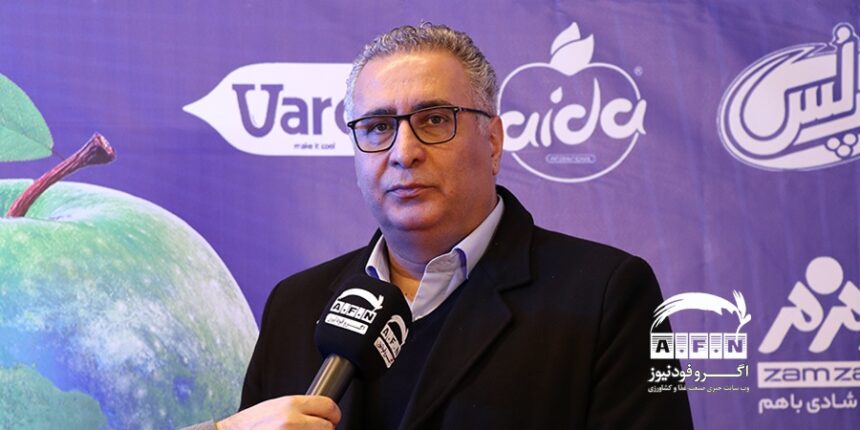
**The Secretary-General of the National Association of Iran’s Distribution Industry highlighted the country’s wartime conditions, emphasizing the crucial role of the private sector and major food industry brands in managing the market and ensuring food security.**
**Agrofood News –** In response to a query regarding the role of major food corporations in supplying food products during the current imposed war, Dr. Ahmad Shirvani stated: “Managing the food market during wartime is one of the most vital challenges for any nation. This issue not only directly impacts public health and livelihoods but can also influence social stability and the overall trajectory of the conflict.”
He added: “Large-scale food companies and brands typically possess significant capacities in production, storage, and distribution. This allows them to meet market demands more rapidly during emergencies. With their extensive distribution networks, these companies can facilitate the delivery of food supplies to various regions across the country, including crisis-stricken areas.”
Shirvani continued: “Another advantage of major companies is their broad connection with both domestic and international suppliers, which plays a critical role in securing the raw materials needed for the food industry. In wartime, the production and distribution of long-shelf-life products—such as canned goods, dried fruits, and packaged items—become increasingly important. Major brands, due to their experience and infrastructure, play a pivotal role in this domain.”
The Secretary-General of the National Association of Iran’s Distribution Industry also pointed to the private sector’s role in market regulation, saying: “By monitoring distribution networks and ensuring transparency in the production and supply process, large companies can effectively prevent hoarding and artificial shortages. At the same time, close cooperation between the government and the private sector can help control prices and prevent unjustified hikes.”
He emphasized: “The swift and secure distribution of food among the public, particularly vulnerable groups, is a key factor in preventing social crises during wartime. Furthermore, many food companies, as part of their corporate social responsibility (CSR), strive to alleviate public hardship by providing food aid to those affected by the war.”
Shirvani also addressed some of the challenges facing these companies, noting: “Incidents in certain regions have disrupted the supply chains of several companies, and in some cases, their equipment or personnel have sustained damage. Additionally, certain security, communication, and governmental restrictions may complicate the procurement and distribution process.”
In conclusion, he remarked: “Despite these challenges, the private sector continues to play a vital role in managing the food market. The National Association of Iran’s Distribution Industry has immediately formed a ‘Crisis Management Task Force’ to address and resolve the issues faced by member companies.”
According to Shirvani, just as various measures were taken to facilitate private sector activities during last year’s 12-day conflict, the association remains fully prepared in the current force majeure situation to utilize the private sector’s capacities to ensure the country’s food security, in coordination with the government and other relevant authorities.