
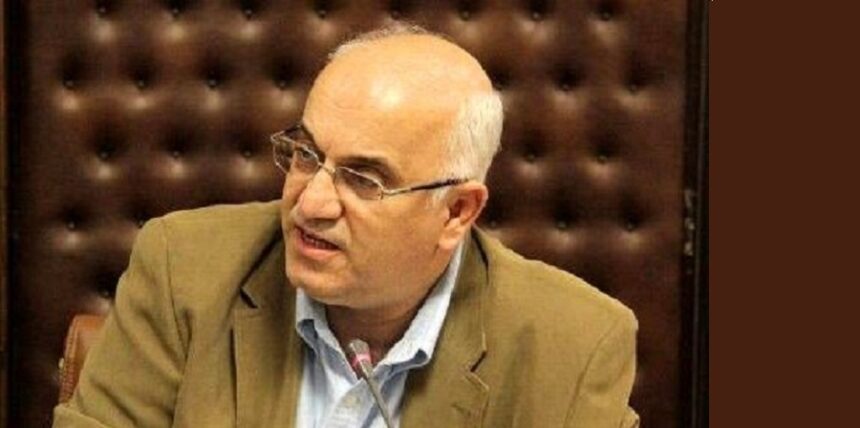
Arsalan Ghasemi stated that in the distribution of goods, we are facing two distinct phenomena: “price increases” (inflation) and “price gouging” (overcharging). While some price increases are unavoidable due to current wartime conditions, others are manageable and subject to control.
According to Agrofood News, citing the Young Journalists Club (YJC), Arsalan Ghasemi, a member of the Agriculture Commission of the Iran Chamber of Cooperatives, noted that producers have proven their commitment to production under all circumstances. However, he argued that the country’s economic management has yet to adopt a “wartime posture.”
According to Ghasemi, economic policymakers are currently operating under the assumption that conditions are normal, failing to implement the necessary strategies for a wartime economy—a transition he describes as both essential and straightforward.
Critique of Subsidy Policies
Commenting on the removal of preferential currency rates and the implementation of the electronic voucher (Kala-barg) system, Ghasemi stated that the initial goal was to ensure basic livelihood needs. However, he criticized the execution, noting it has been ineffective. He emphasized that in the current economic climate, the country must “insure” its economy, yet the banking and economic systems lack the necessary wartime adaptation. He stressed that officials frequently use slogans without providing the practical support required to ensure the security of goods supply.
Controlling Price Gouging
Ghasemi highlighted that while some inflation is inevitable due to wartime conditions, “price gouging” can be prevented through transparent, traceable distribution networks—specifically citing the cooperative network. He expressed regret that officials are currently neglecting these existing mechanisms.
Inefficient Monitoring and Economic Pressures
The official pointed out a major flaw in the system: “We import livestock feed despite all the difficulties, but we fail to monitor its distribution effectively, which ultimately drives up the price of chicken in the market.”
He also criticized the Agricultural Bank’s efforts regarding digital wallets, stating that any system that does not prioritize the interests of the industry is useless. Ghasemi warned that “enemies are focusing all their efforts on the economy to achieve what they could not achieve on the battlefield or in the streets.” He concluded that if officials truly implemented the directives of the Supreme Leader, all these problems could be resolved, but he alleged that the influence of “special interest groups and rent-seekers” currently prevents such corrective actions. He added that the value of the electronic voucher system must be adjusted to serve its primary purpose effectively.